

Ernest Owusu Boateng
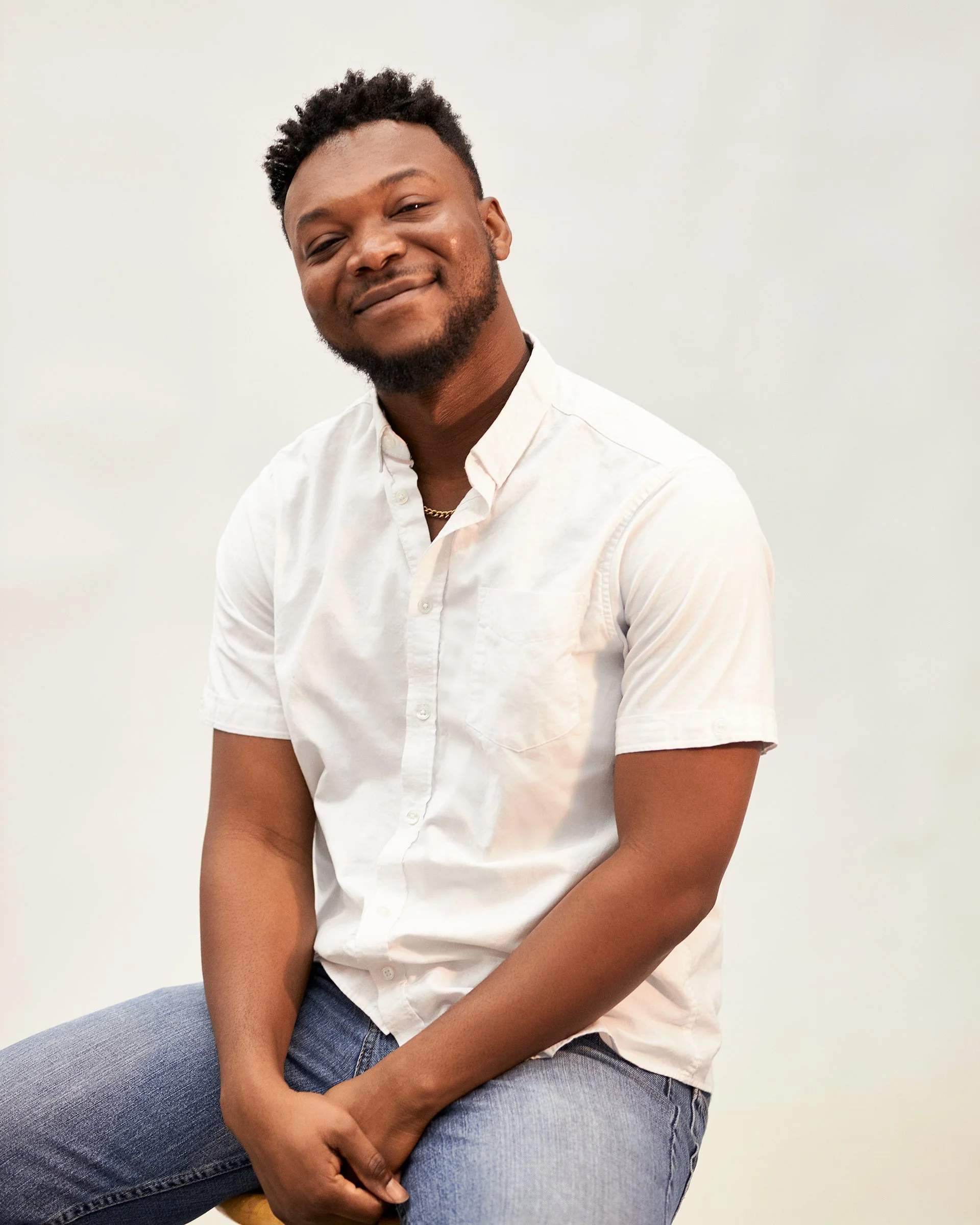
Ernest is a Ghanaian visual artist based in Corner Brook, Newfoundland and Labrador. Working primarily with photography and digital media, his practice explores labour, migration, identity, and the politics of representation within landscapes shaped by colonial and industrial histories. Boateng holds an MFA from Memorial University of Newfoundland (Grenfell Campus), where he teaches in the Visual Arts program. His ongoing project Black in Beothuk places Black figures within historically charged Newfoundland landscapes, challenging dominant narratives of place and opening space to reconsider absence, memory, and belonging in Newfoundland Canada.
Ernest est un artiste visuel ghanéen basé à Corner Brook, à Terre-Neuve-et-Labrador. Travaillant principalement avec la photographie et les médias numériques, sa pratique explore le travail, la migration, l’identité et les politiques de la représentation au sein de paysages façonnés par des histoires coloniales et industrielles. Boateng détient une maîtrise en beaux-arts (MFA) de l’Université Memorial de Terre-Neuve (campus Grenfell), où il enseigne au programme d’arts visuels. Son projet en cours, Black in Beothuk, place des figures noires dans des paysages de Terre-Neuve chargés d’histoire, remettant en question les récits dominants du territoire et ouvrant un espace pour reconsidérer l’absence, la mémoire et le sentiment d’appartenance à Terre-Neuve, au Canada.
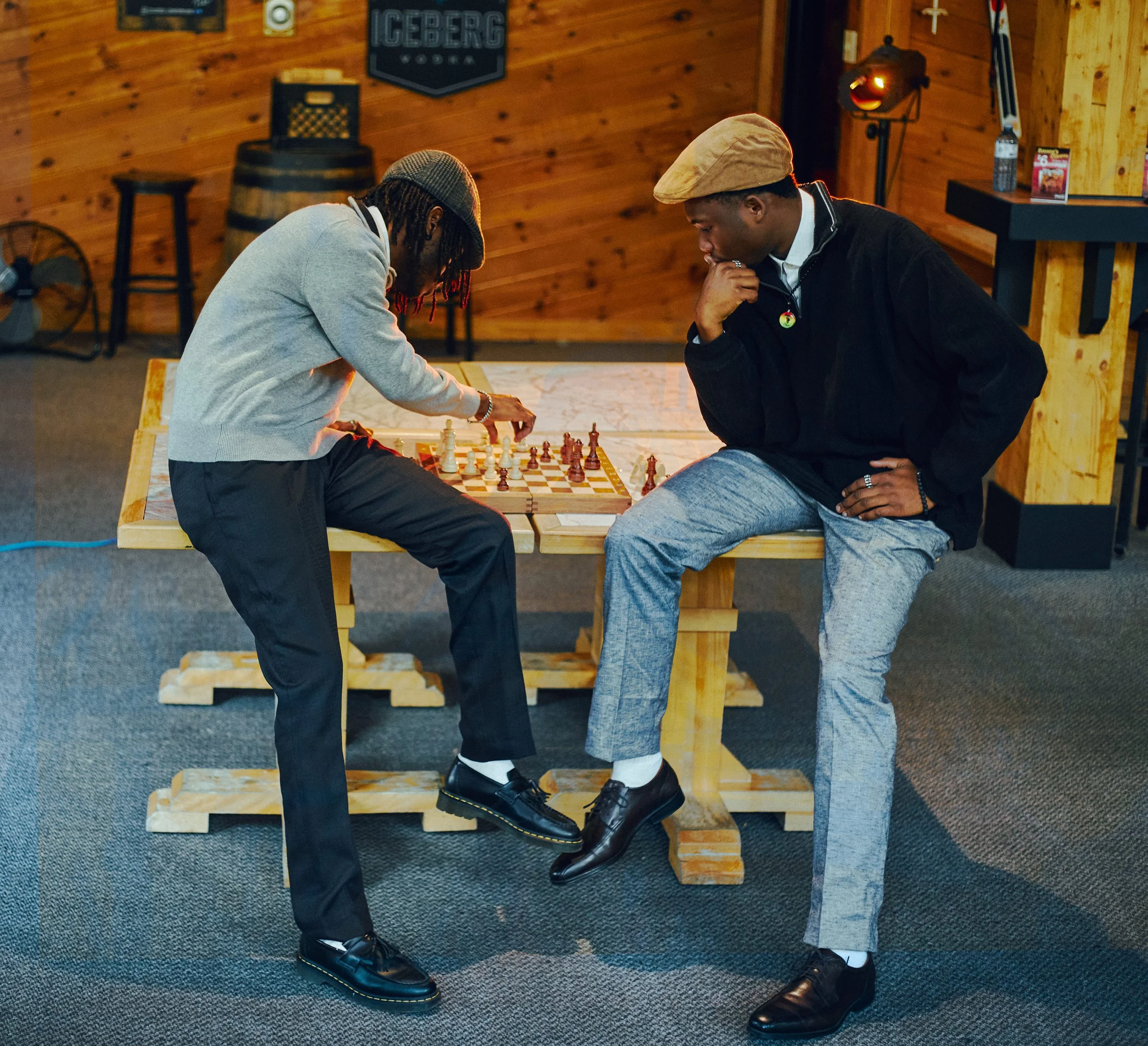
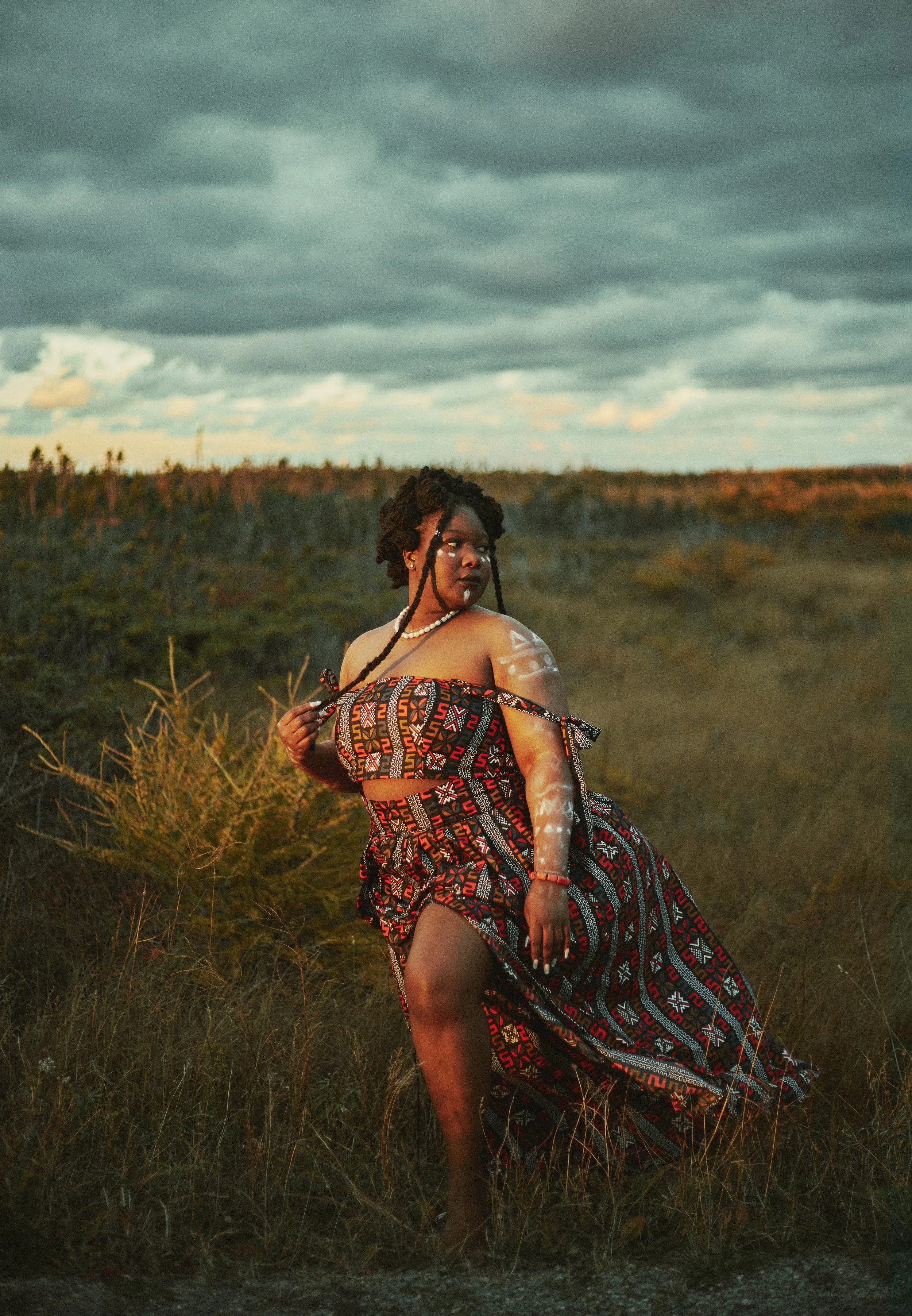
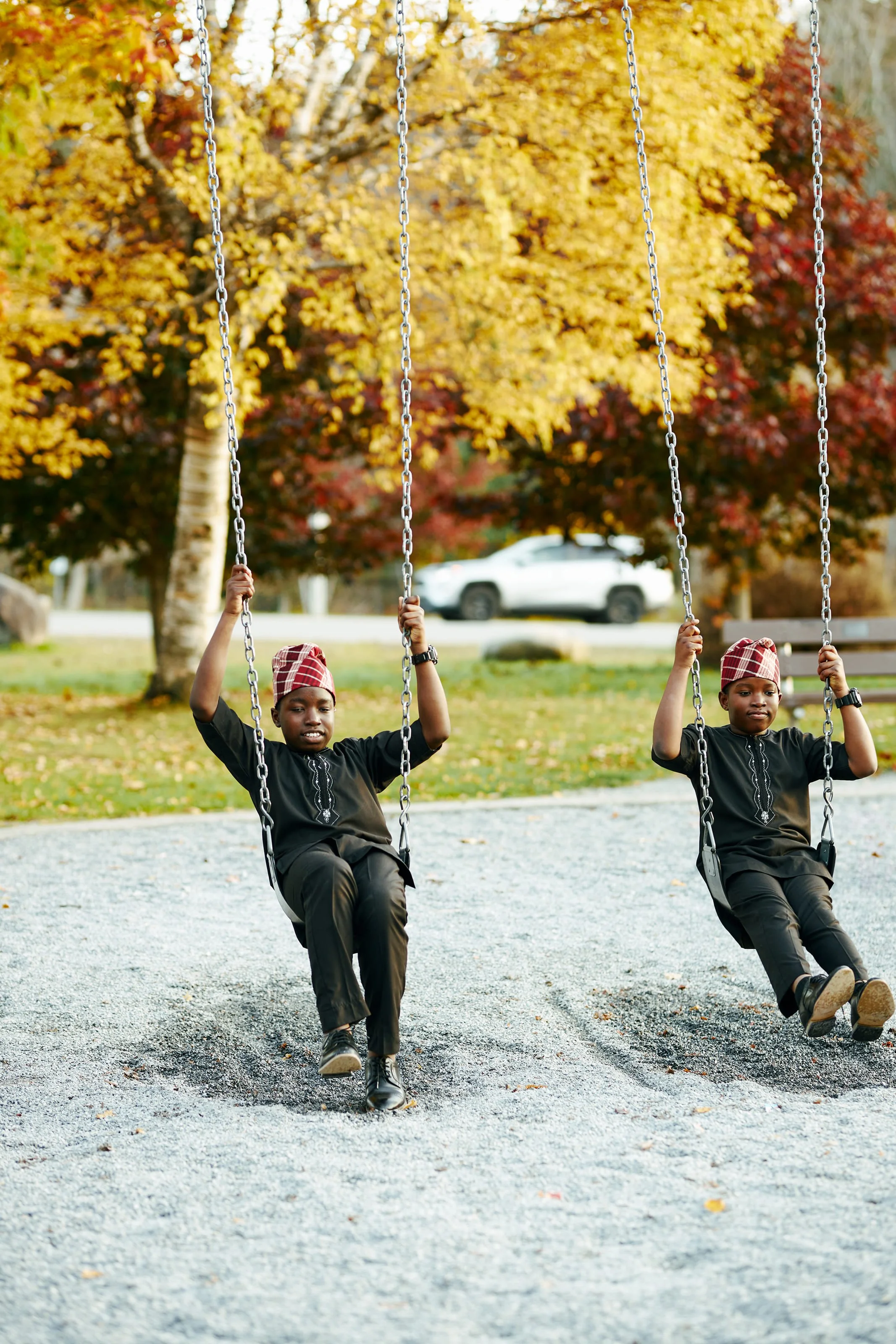
Black in Beothuk: Landscape, Multiplicity, and the Politics of Presence
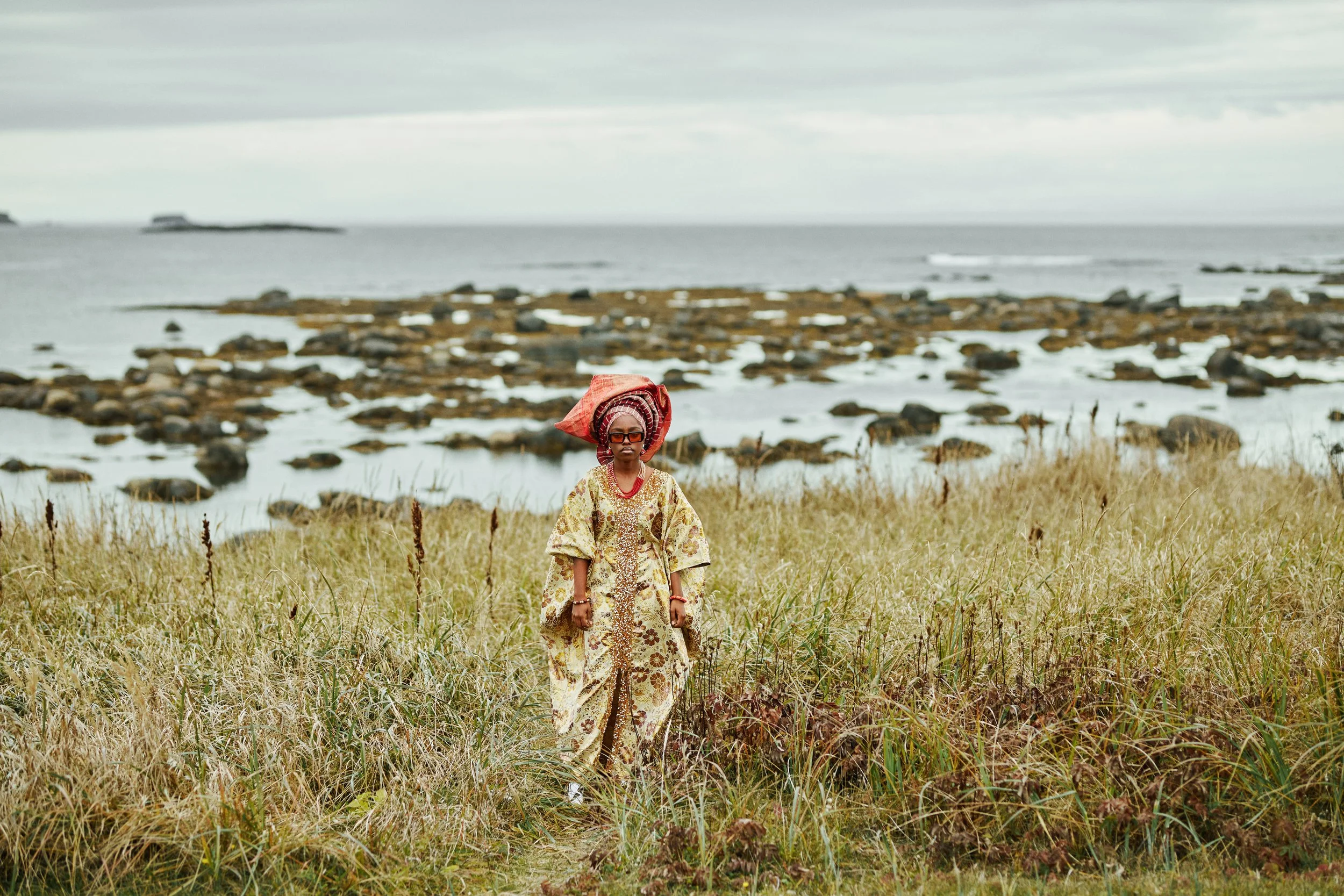
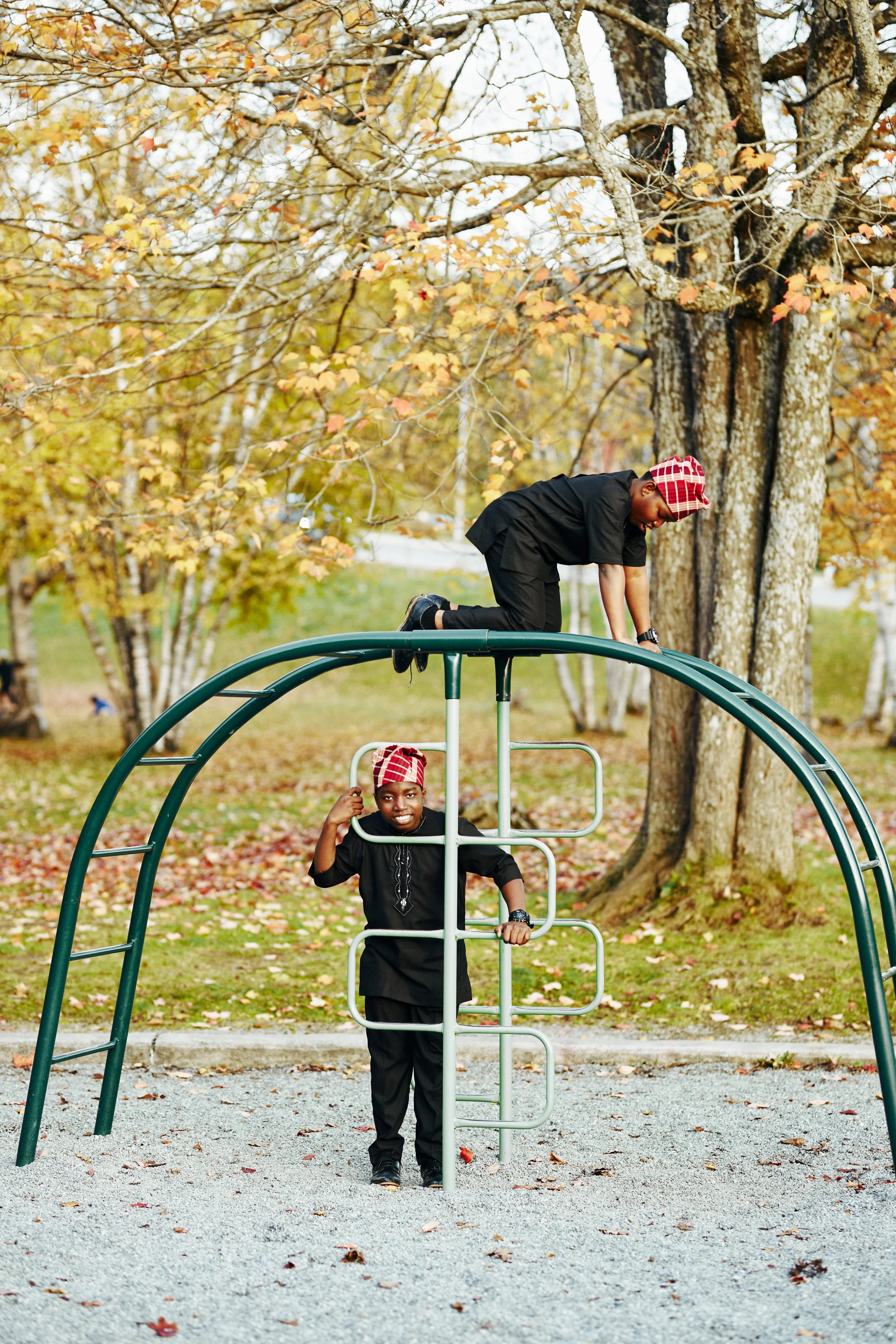
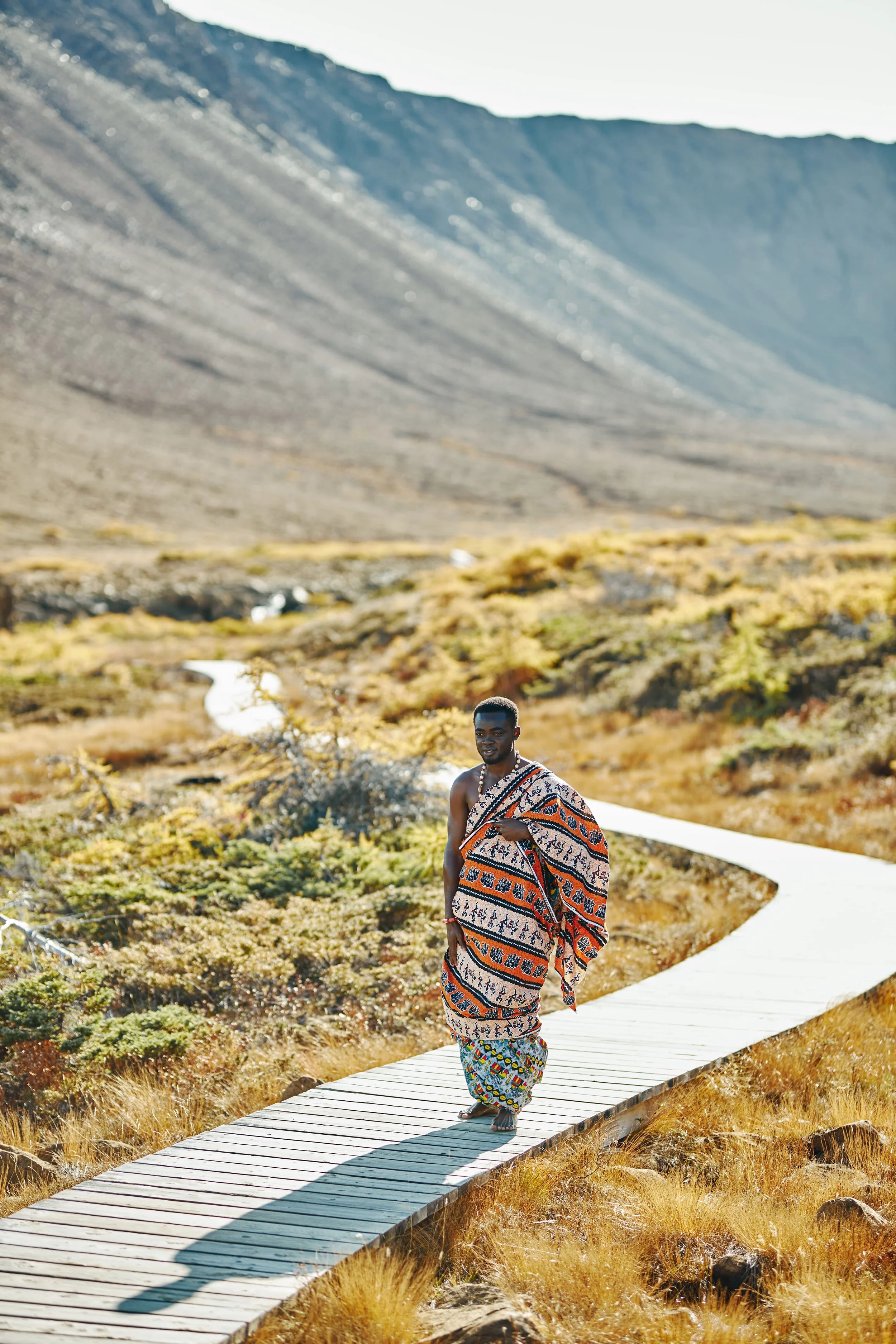
Landscapes are often understood as natural or neutral terrains, sites of scenic beauty or historical significance that appear fixed in time. Yet landscape is never simply a physical environment; it is a cultural construct shaped by memory, power, and representation. In Black in Beothuk, the Newfoundland landscape becomes a critical site through which questions of belonging, visibility, and historical narrative are explored. Through staged photographic portraits situated within iconic locations, the project reimagines the terrain not as a static monument to the past, but as a dynamic space where histories intersect and identities continue to emerge.
At the core of the project lies an engagement with how Newfoundland’s visual culture has historically been shaped by singular narratives of European arrival. Sites such as L’Anse aux Meadows have long been framed as foundational moments in the story of North America, frequently described through institutional language such as the “Meeting of Two Worlds.” This framing positions the landscape as a stage for historical encounter, but it also stabilizes a particular narrative of origin that foregrounds European exploration while limiting the scope of who is imagined within the site’s visual and cultural memory.
Black in Beothuk intervenes in this narrative by introducing contemporary Black presence into these environments. The photographic portraits are carefully staged within the architectural and natural features of the landscape, creating moments of visual friction that disrupt expectations. The contrast between vibrant textiles and the muted tones of sod structures, stone, and terrain produces a striking compositional tension. This tension operates not only aesthetically but conceptually, prompting viewers to reconsider the assumed neutrality of the landscape and the histories embedded within it.
The title of the project references the Beothuk, the Indigenous people of Newfoundland, whose history serves as a reminder that narratives of place are shaped by presence and loss. Rather than attempting to represent Beothuk experience, the work acknowledges the layered histories of the land and the ways in which memory and erasure shape contemporary understandings of place. In doing so, the project situates itself within a broader conversation about how landscapes carry traces of both visibility and absence.
Multiplicity becomes a central conceptual framework for understanding the work. The landscape is not presented as a singular historical entity, but as a site where multiple temporalities coexist. The memory of Indigenous presence, the institutional dominance of European settlement narratives, and contemporary experiences of migration intersect within the same spatial field. By bringing these layers into dialogue, the project repositions the landscape as an evolving terrain shaped by ongoing encounters rather than a fixed historical tableau.
A significant dimension of Black in Beothuk lies in its engagement with digital cartography. The integration of mapping interfaces situates the portraits within the visual language of geospatial systems — the same systems that organize and codify how place is understood in contemporary life. When the images appear within a mapping framework, complete with coordinates and institutional labels, they become part of a broader conversation about how landscapes are represented and navigated. This digital layer transforms the work from a purely photographic intervention into a cartographic one, where presence is not only depicted but also located and indexed.
Historically, maps have functioned as instruments of authority, tools through which territories are defined and histories are inscribed. By inserting Black presence into this visual framework, the project subtly subverts the authority of the map, reframing it as a site of negotiation rather than control. The interaction between the portrait and the mapping interface produces a layered reading of place, where institutional narratives and lived experiences coexist and sometimes collide.
The work also exists in dialogue with broader artistic practices that interrogate the relationship between race and landscape. Artists such as Ingrid Pollard have demonstrated how national landscapes often function as symbolic terrains of identity, spaces where notions of belonging are visually constructed. Black in Beothuk extends this lineage into the North Atlantic context, engaging with a terrain frequently imagined as remote, rugged, and historically homogeneous. By inserting contemporary presence into this environment, the project challenges the myth of the “empty” or “untouched” north and reveals the landscape as a site of ongoing cultural production.
Central to the project is the artist’s personal experience of migration. As a Ghanaian living in
Newfoundland, the act of photographing becomes a means of negotiating identity and spatial belonging. The camera functions as a tool of orientation — a way of situating oneself within a new environment while simultaneously reshaping the visual narratives that define it. This autobiographical dimension grounds the work in lived experience, transforming the portraits into gestures of presence that are both personal and collective.
The images do not seek to resolve the tensions they introduce; instead, they hold them in suspension. The viewer is invited to inhabit the space between histories, to consider how landscapes are shaped by what is remembered and what is omitted. In this sense, the project operates less as a corrective to history and more as an expansion of its frame, opening the possibility for multiple narratives to coexist.
Ultimately, Black in Beothuk reframes the Newfoundland landscape as a site of multiplicity rather than singularity. By intersecting physical environments with digital geographies, institutional narratives with personal experience, and historical memory with contemporary presence, the project reveals place as an active and evolving construct. It invites viewers to reconsider how landscapes are seen, who is visible within them, and how new stories emerge when the frame of belonging is widened.
Through its careful interplay of image, site, and narrative, Black in Beothuk offers a meditation on presence and on the transformative potential of being seen within spaces that have historically rendered certain bodies invisible.